Helping Kids Build Friendships : Why Strong Connections Matter at Every Age
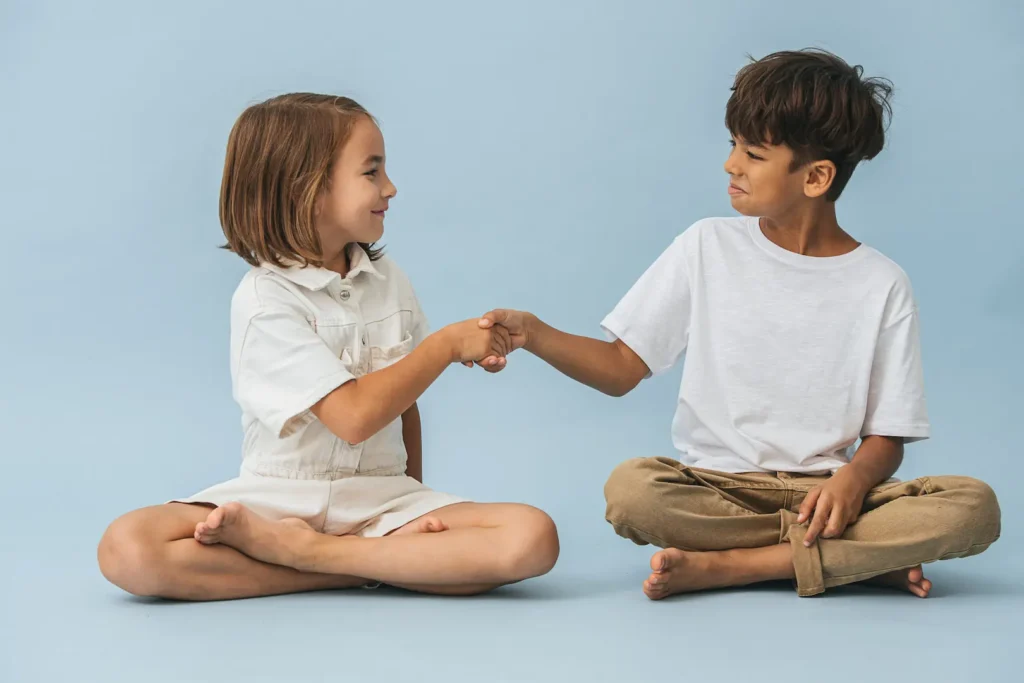
Back-to-school season is filled with new beginnings: fresh notebooks, new teachers, and often, new classmates. Among the most exciting—and sometimes intimidating—parts of the return to school is making friends.
For children, friendships are more than just playtime companions; they are a critical part of emotional and social development. And as research continues to show, the importance of having friends doesn’t stop in childhood—it carries through every stage of life.
Childhood Friendships: Growing Together in Happiness
Friendships in childhood do more than fill playtime—they shape how kids feel about themselves and the world.
Holder and Coleman’s (2015) review shows that childhood friendships strongly correlate with happiness, self-esteem, and life satisfaction, while also buffering against loneliness, depression, and peer conflict. Children with close friends develop better coping skills and prosocial behavior that support school adjustment and emotional resilience.
Moreover, according to Xie et al. (2022), having close connections in childhood can pay off decades later. Adults who enjoyed strong early bonds not only maintained sharper thinking skills but also experienced less cognitive decline with age.
Why it matters: When children build meaningful friendships, they’re not just having fun—they’re nurturing mental health, self-worth, and long-term brain resilience.
Adolescent Relationships: Emotional Well-Being and Social Strength
As children grow, friendships become more complex—and even more essential for emotional health.
A systematic review in BMC Public Health (Alsarrani et al., 2022) found that adolescents with high-quality bonds—marked by trust, closeness, and emotional support—experienced better mood, life satisfaction, happiness, and self-esteem. Friendship quality is consistently linked to positive mental health outcomes.
Adding to this, Li et al. (2025) used a longitudinal model to show that in Chinese adolescents, having more close friends predicted higher subjective well-being over time. This was explained by increases in interpersonal trust and perceived social support, both key components for emotional resilience.
Bottom line: In adolescence, relationships foster emotional strength and wellbeing, giving teens social and psychological tools for navigating life.
Language Connection: Words That Build Bonds
Want to help kids not only make friends but speak to them in English? The playground becomes a perfect learning environment:
Try teaching and practicing these common phrases:
- “Can I play?”
- “Do you want to be my friend?”
- “Let’s play tag!”
Using short, practical phrases builds both language skills and social confidence. Playing these out at home gives children comfort with language—so they don’t hesitate at school!
Parent Tips: Growing Friendships and Words Together
| Stage | Strategies for Friendship & Language |
| Childhood | • Arrange playdates and group activities.
• Narrate your social interactions like “Let’s invite Alex to play.” |
| Adolescence | • Encourage school clubs, study groups, and casual hangouts—natural spaces for English phrases.
• Ask reflective questions: “Did you talk to someone new today?” |
These efforts reinforce two powerful habits: connecting with others and using language with confidence.
Why Friendships Matter Across Ages
| Age Stage | Value of Friendships |
| Childhood | Builds happiness, coping skills, and supports long-term cognitive health. |
| Adolescence | Develops emotional well-being, identity, and mutual support. |
Friendships are not an optional part of growing up—they’re essential. They lay the groundwork for emotional strength, academic confidence, and personal happiness.
Final Takeaway
Encourage your child to form genuine connections—and give them the language to express them. Relationships and friendship words go hand-in-hand. They help kids grow socially and linguistically, and support emotional development that lasts a lifetime. School is not just for reading and writing—it’s for belonging too.
References
- Alsarrani, A., Hunter, R. F., Dunne, L., & Garcia, L. (2022). Association between friendship quality and subjective well-being among adolescents: A systematic review. BMC Public Health, 22, 2420. Link
- Holder, M. D., & Coleman, B. (2015). Children’s friendships and positive well-being. In M. Demir (Ed.), Friendship and Happiness (pp. 109–127). Springer. Link
- Li, R., Xu, W., Nie, H., & Zhang, W. (2025). The longitudinal relationship between close friendship and subjective well-being: The chain mediation model of interpersonal trust and perceived social support. Behavioral Sciences, 15(4), 480. Link
- Xie, J., Fan, X., Yin, P., Gu, J., & Yang, C. (2022). Association between childhood friendship and cognitive ageing trajectory in later life: Evidence from the China Health and Retirement Longitudinal Study (CHARLS). BMC Geriatrics, 22, 494. Link
🌟 For more engaging learning ideas, visit our blog weekly! We share creative activities, language tips, and more to make learning exciting. Stay connected with the latest posts on the Langmobile blog! And don’t forget to check out awesome songs on our Apple Music, YouTube, and Spotify pages to help with your language learning!