5 Simple Games to Help Your Toddler Learn English (or French) Without Realizing It
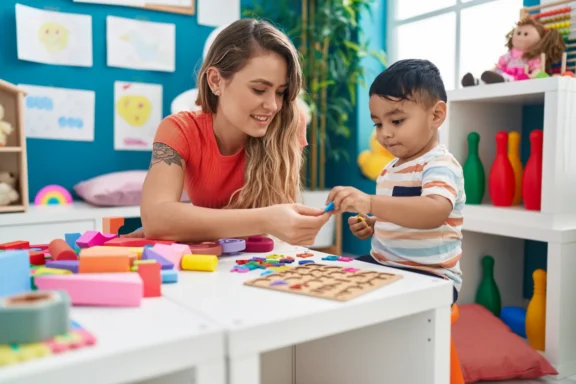
“Again, again!”
If you have a toddler at home, you’ve probably heard those words more times than you can count. The same song, the same story, the same games, over and over!
But what if all that repetition, which sometimes drives us a little crazy, is actually one of the secrets to learning a new language?
Between the ages of 2 and 5, children discover the world through play, observation, and imitation. They don’t need long grammar lessons to begin learning English or French.
At Langmobile, we’ve believed for more than 20 years that children learn best when they’re actively involved, having fun, and feeling confident.
Here are five simple games you can try at home. No special equipment needed, and you don’t even have to speak the language perfectly!
1. Simon Says… in English!
Some games never go out of style.
Give your child simple instructions in the language they’re learning:
“Jump!”
“Clap your hands!”
“Touch your nose!”
Start with two or three actions, then gradually introduce new ones.
This game connects words with movement. Best of all, children can participate before they’re even ready to say the words themselves.
2. The Colour Hunt
Choose a colour and go searching around the house.
“Find something blue!”
Your child has to find a blue object and bring it to you.
Once they’ve mastered a few colours, introduce shapes, sizes, or everyday objects.
Want to make it more interesting? Switch roles and let your child lead the game!
Suddenly, learning vocabulary becomes a little adventure.
3. The Mystery Bag
Place a few familiar objects inside a bag: a toy car, a spoon, a ball, or a stuffed animal.
Ask your child to reach inside and guess what they’re touching.
“Is it a ball?”
“Yes, a ball!”
You can name the object together without insisting that your child repeat the word.
The goal is to create a connection between the word, the object, and a fun experience.
And let’s be honest, what toddler doesn’t love a little mystery?
4. Sing It, Move It, Remember It!
Young children love music, especially when they can move along.
Try singing Head, Shoulders, Knees and Toes to introduce body parts in English.
Start slowly, then speed things up.
Laughter is almost guaranteed!
Songs also provide natural repetition without making children feel like they’re doing an exercise.
And if your child asks for the same song fifteen times? Now you know why that repetition can be so valuable!
5. The Pretend Restaurant
Gather a few plates, some play food, or even pictures of different foods.
Welcome to your child’s restaurant!
“Apple, please!”
“Here you go!”
“Thank you!”
Even with just a few words, your child begins discovering how to use a new language to communicate.
You can also pretend to run a grocery store, a veterinary clinic, or a bakery.
The possibilities are endless!
The Secret? A Few Minutes of Fun Every Day
We sometimes think learning a new language requires lots of time, expensive materials, or complicated teaching methods.
But for young children, small, repeated experiences can make a meaningful difference.
Five or ten minutes of play, a song during the drive to daycare, or a few new words at breakfast can all become opportunities to discover another language.
And if your child doesn’t respond right away, don’t worry. Understanding often develops before speaking.
The goal isn’t to have a perfectly bilingual child by age five. It’s to help children become curious, comfortable listening, and confident enough to try communicating.
Because sometimes, the most meaningful learning begins with something as simple as a game.
Want to Learn More?
Looking for more fun activities? Explore our Langmobile article, 7 Fun Language Games Kids Beg to Play Again, for more ways to practice vocabulary together.
For information about raising multilingual children, the American Speech-Language-Hearing Association (ASHA) offers helpful guidance on using conversation, songs, stories, and play to support language development.
The British Council also shares practical advice for introducing English at home through games, songs, and everyday routines.
Because learning a language should be a positive experience. And what could be more natural for a child than learning through play?