4 Reasons Why Creative Hobbies Matter More Than Ever for Kids🌈
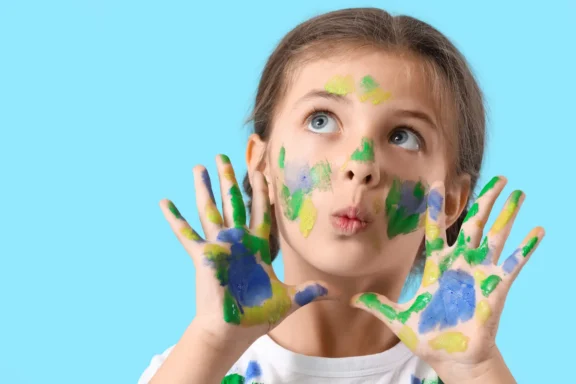
In a world that moves faster than ever, where screens are always within reach and schedules can feel overwhelming, one simple thing continues to quietly shape childhood in the most powerful way: hobbies.
Not the kind of hobbies that are forced or overly structured—but the kind that feel like play. The kind that children choose, explore, and return to again and again.
Because hobbies aren’t just “extra.”
They are where children grow.
🧠 Hobbies build the brain—naturally
When children engage in hobbies—whether it’s drawing, building, dancing, or playing music—they are doing far more than passing time.
They are strengthening essential cognitive skills.
Recent research shows that open-ended play and activity-based engagement support problem-solving, creativity, and even early academic skills like reading and math (Cankaya et al., 2025).
What’s powerful here is that this learning doesn’t feel like learning.
There are no worksheets. No pressure. No “right” answers.
Just curiosity.
And that’s often when the deepest learning happens.
💛 Emotional growth starts in the small moments
Hobbies also give children something incredibly important: a safe space to express themselves.
Whether it’s painting how they feel, practicing a song, or building something from scratch, hobbies allow children to:
- process emotions
- build confidence
- experience pride in their efforts
In fact, everyday activities like drawing, reading, or playing games at home have been directly linked to stronger socioemotional development and prosocial behavior in young children (Study, 2024).
These small, repeated moments matter.
They help children understand themselves—and others.
🤝 Hobbies create connection
One of the most beautiful things about hobbies is that they bring people together.
Children bond over shared interests.
They collaborate. They communicate. They learn to take turns, to listen, to lead.
Research shows that play and activity-based engagement are deeply tied to social communication and overall wellbeing, especially when children interact with others (O’Keeffe & McNally, 2023; summarized in 2025 review).
This is where language grows naturally.
Not through memorization—but through real conversations, laughter, and shared experiences.
🌱 Hobbies help children stay on a positive path
Beyond development, hobbies also play a protective role in children’s lives.
A large longitudinal study found that young people who regularly engage in hobbies show lower engagement in risky behaviors over time, highlighting how meaningful activities can support healthier life paths (Bone et al., 2024).
When children have something they love—something that excites them, challenges them, and fulfills them—they are more grounded.
More confident.
More connected.
🌞 It’s not about being “good” at something
This is important.
Hobbies are not about performance.
They are not about perfection.
They are about exploration.
A child doesn’t need to be the best at soccer, or art, or music. What matters is that they:
- feel joy
- feel safe
- feel free to try
Because in those moments, they are building something much deeper than a skill.
They are building a sense of self.
✨ Final thoughts
In 2026, it’s easy to focus on what children should be learning.
But hobbies remind us of something essential:
Children don’t just learn through instruction.
They learn through experience. Through play. Through connection.
So whether it’s painting at the kitchen table, joining a camp activity, or discovering a new passion—those moments matter.
More than we sometimes realize.
Because behind every hobby…
there is a child learning who they are.
📚 References
- Cankaya, O., Martin, M., & Haugen, D. (2025). The relationship between children’s indoor loose parts play and cognitive development: A systematic review. Link
- Bone, J. K., Fancourt, D., Sonke, J. K., & Bu, F. (2024). The changing relationship between hobby engagement and substance use in young people. Link
- Study (2024). Exploring the role of home play and learning activities in socioemotional development. Link
- O’Keeffe, C., & McNally, S. (2023). Discussed in: Children’s perspectives of play and wellbeing (2025 review). Link
🌟 For more engaging learning ideas, visit our blog weekly! We share creative activities, language tips, and more to make learning exciting. Stay connected with the latest posts on the Langmobile blog! And don’t forget to check out awesome songs on our Apple Music, YouTube, and Spotify pages to help with your language learning!