5 Ways Summer Camp Builds Social Skills That Last a Lifetime 🌞
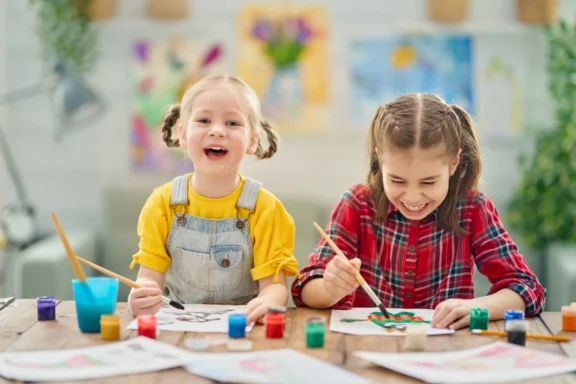
Summer is almost here, and with it comes the familiar mix of excitement and questions that every parent knows well. Will my child make friends? Will they be okay on their own? What social skills will they actually develop from this experience?
Social skills are one of the most valuable things children gain at summer camp. If you’ve ever wondered whether summer camp is “worth it” beyond the fun and fresh air, here’s a reassuring truth: researchers and child development experts have long recognized camp as one of the richest environments for building the social and emotional skills that serve kids well into adulthood. In fact, few settings offer the kind of social learning that happens naturally at camp — every single day.
Here are five powerful ways it happens — often without children even realizing it.
1. Learning to Navigate New Social Connections
At school, most children spend time with the same group of peers year after year. Camp is different. Kids arrive as strangers and, within days, figure out how to introduce themselves, find common ground, and build trust from scratch. These are real social skills — practiced in real time.
This repeated practice of forming new social connections is actually one of the most valuable exercises a child can have. According to the American Psychological Association, early positive peer experiences are directly linked to a child’s long-term emotional resilience and sense of belonging.
At a Langmobile summer camp, this happens naturally — children who may speak different home languages find social connection through shared activities, laughter, and a little English or French, building bridges that go well beyond words.
2. Resolving Conflict — A Core Social Skill
One of the most important things camp does? It removes the safety net — just a little. When a disagreement happens over a game or a group project, children don’t have a parent to mediate. They have to work it out themselves (with caring counselors nearby, of course).
This “productive discomfort” is where real social and emotional growth happens. The Child Mind Institute notes that children who regularly navigate peer conflict in low-stakes environments develop stronger empathy, communication, and self-regulation — the social skills that become the foundation of healthy adult relationships.
3. Discovering the Joy of Social Teamwork
Whether it’s a relay race, a group craft project, or a skit performed in front of friends, camp is filled with social moments that only work when everyone contributes. Children quickly learn that their role matters — and so does listening to others.
This collaborative social spirit is something that can’t easily be taught in a classroom. It has to be felt. When a team celebrates together, children internalize what it means to be a reliable, encouraging presence for others — a quality that employers, teachers, and future friends will notice for years to come.
4. Building Social Confidence Through Small Wins
At camp, every day brings small social challenges: trying a new activity, speaking up in a group, or simply finding the courage to join a game already in progress. Each of these moments, successfully navigated, adds a quiet layer of confidence.
The Harvard Graduate School of Education highlights that children develop resilience not through large triumphs, but through the accumulation of everyday challenges they face and overcome. Camp is a beautifully designed space for exactly that kind of social growth.
5. Experiencing Belonging in a Diverse Community
Perhaps the most underrated gift of summer camp is the simple, profound feeling of belonging. Children are surrounded by peers who are also figuring things out, also a little nervous, also hoping to have fun. That shared vulnerability creates real and lasting bonds.
At Langmobile camps, this sense of togetherness is enriched by the multicultural, multilingual environment. Children learn — through experience rather than instruction — that social connection transcends background, language, and personality. UNICEF’s research on inclusive environments reinforces that children who experience diverse, welcoming communities early in life grow into more open-minded, empathetic adults.
A Summer of Social Growth That Gives Back All Year Long
The friendships, the laughter, the moments of social bravery — they don’t stay at camp. They come home with your child in the way they hold themselves, how they greet new people, and the quiet confidence that comes from knowing: I can handle new things.
That’s what makes summer camp so much more than a week of activities. It’s an investment in your child’s development — and in who they are becoming.
Langmobile’s summer camps are filling up fast for 2026. If you’d like to secure a spot for your child — or simply learn more about what a typical camp day looks like — visit our summer camp page and we’d love to welcome your family this summer. 💛
🌟 For more engaging learning ideas, visit our blog weekly! We share creative activities, language tips, and more to make learning exciting. Stay connected with the latest posts on the Langmobile blog! And don’t forget to check out awesome songs on our Apple Music, YouTube, and Spotify pages to help with your language learning!