Why I Plan Less: The Power of Spontaneity in 2026
We often think a teacher needs to be thoroughly prepared with plan A, B, and C in order for class to run smoothly, and to an extent that may be true. Students are keen observers who can tell when a teacher is clumsily improvising a lesson on the spot. However, there is immense value to be had when we don’t over-prepare and allow room for the lesson to live a life of its own.
“To study is not to consume ideas, but to create and re-create them.” – Paulo Freire
We set goals for the lesson: what grammar points to cover, what vocabulary to drill, what materials we need, what songs to play, as well as when and in what order we will execute each step. We decide what students know, what they need to know, what they need to practice, what ‘level’ they are, even what words to pre-teach before readings or listening exercises. We block out the physical and digital space: toys, dice, windows and videos. We ensure we control the flow to manage the participants. All these things have their place. I just like to remember a distinction between “control” and “guidance”.
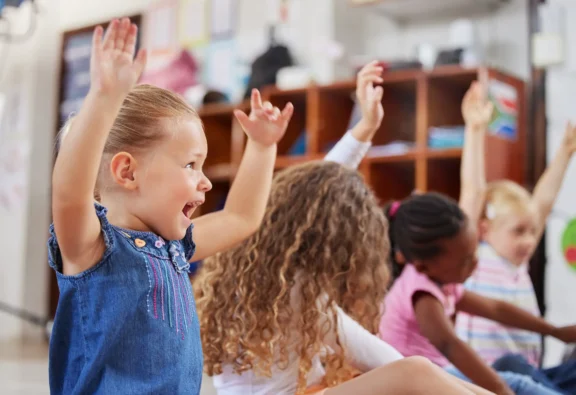
If you assume the role of a director and force the students into roles as actors, they may take on a passive role with relation to learning. You want to encourage active, internally motivated participation that will help lessons stick. Focus on building their ability to react in a changing environment. While structured activities are essential as a foundation, the goal should be ‘guiding’ the students. Provide the space and the materials, but step back and see what they create together. You may find yourself being hands-on in the beginning of the lesson, but gradually let go. Give them the opportunity to make mistakes, self-correct, and correct each other!
The classroom community
“I believe that education, therefore, is a process of living and not a preparation for future living.” – John Dewey
Language is a social activity. The more opportunities have to make mistakes, they more they can bond with one another through learning; the tighter the little community will become. The classroom is not separate from, but continuous with, everything we learn at home and online. It’s imperative to cultivate relationships between your students through collaborative play that can then feed back into the world ‘outside’. Set up activities where they have to help one another and guide one another. This builds trust and confidence between them that will allow them to explore their identities in a new tongue.
Learning a new language can be very scary. We can’t make the same jokes or let our personalities shine like in our mother tongue. Will it be harder to make friends? This is a worry you should keep in mind when lesson planning. A successful activity doesn’t just teach the vocabulary or grammar but creates a space to make friends with one another. Friendship isn’t something you can plan for but must forge in-the-moment.
Leave room for life
“To teach in a manner that respects and cares for the souls of our students is essential if we are to provide the necessary conditions where learning can most deeply and intimately begin.” – bell hooks
The walls of the room or the borders of our computer screen make it easy for us to think of ourselves as cut off from ‘real life’ when we enter the classroom, but the world ‘follows’ us in. We have to discover what this life looks like each day. Students bring in their individual and collective experiences and emotions. We need to make sure we leave room for this in our lesson plans!
If your students are exhausted or processing difficult events and emotions, what do they need? Is it really so important that they nail the grammar points of the day so you can keep up with pacing? Or is it more important to make a space for connection and confidence building through playing together and feeling the support they need to succeed? In planning less and letting yourself see where your students are at in the moment, you begin to organically build a path together.
From this small piece I hope you took something you can use next time you’re planning for your students: plan less. Relinquish control, foster your little community, and be aware of how your lessons connect with their world as a whole. Along the way I included three of my favourite writers on the subject of education. Check them out! Each teacher contains a wealth of knowledge we can take along with us. Happy teaching!